Insurance
Wondering if your insurance covers your dental exam and cleaning? We’ll let you know in seconds.
Creating the bone height upper implants need to succeed.
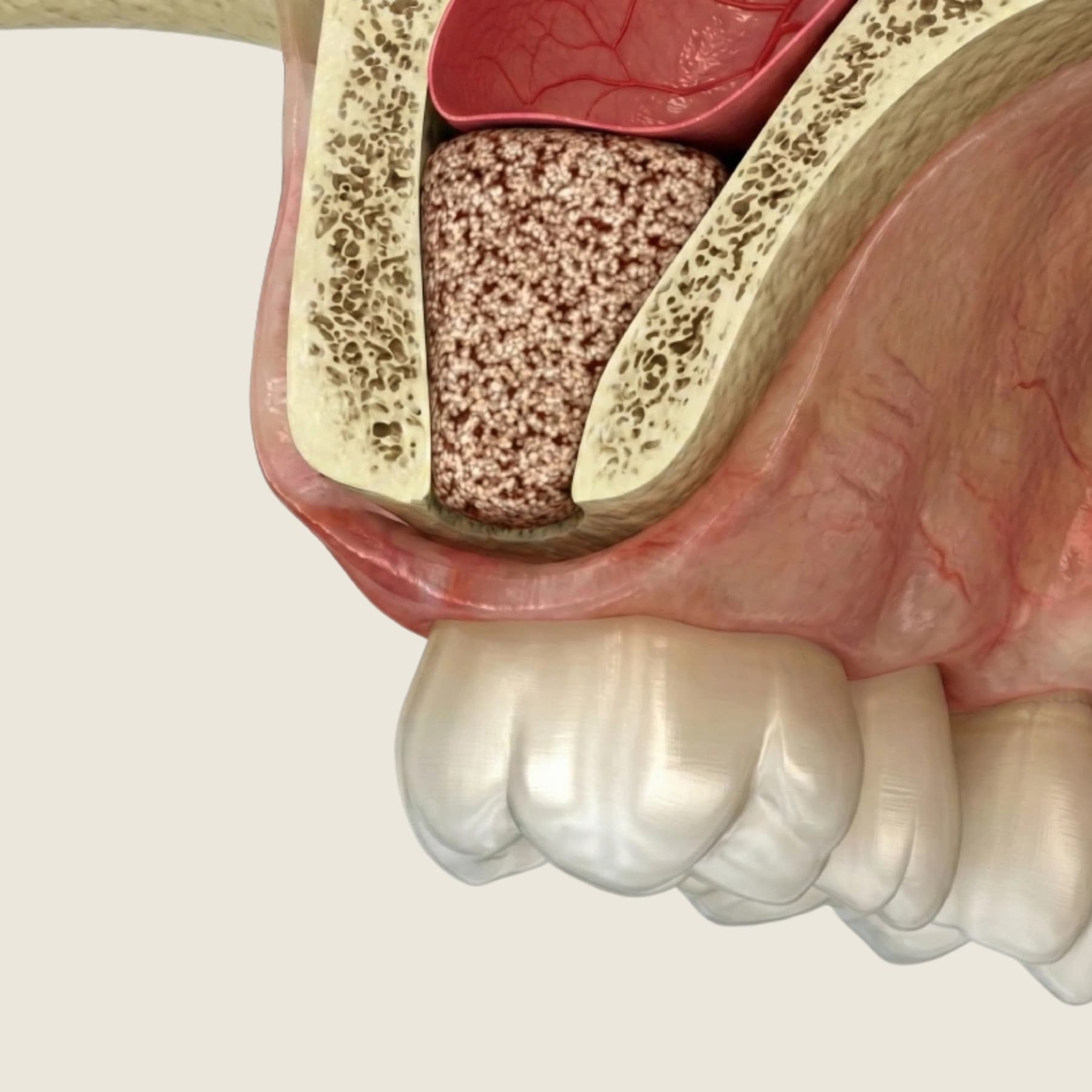
A sinus lift adds bone height to the upper back jaw, where the sinus cavity sits close to the ridge, making dental implants possible in an area that often lacks bone. Upper molars are frequently the first teeth lost and the trickiest to replace, because the sinus expands into the space the roots once occupied. A sinus lift rebuilds that lost real estate, converting told you cannot into cleared for implants.
The sinus membrane is gently lifted through a small access, and grafting material is placed beneath it, where your body matures it into solid bone over the following months, ready to anchor an implant. 3D imaging maps your sinus anatomy precisely beforehand, so the approach is planned to the millimeter. Smaller lifts can sometimes be done through the implant site itself, with the implant placed the same day when enough native bone exists.
A sinus lift turns not enough bone into a firm foundation, opening the door to fixed implant teeth in the upper molar area, where chewing power matters most, instead of settling for a removable partial or a shortened bite. It restores options that bone loss had quietly foreclosed, and it does so predictably: sinus augmentation is among the most studied, most successful grafting procedures in implant dentistry.
If you were told you lack bone for upper implants, or you lost upper back teeth years ago and the sinus has since expanded into the space, a sinus lift very likely restores your implant eligibility. It is a planned step on the road to specific implants, never a standalone recommendation, and your CBCT scan tells us definitively whether you need one, how much height is missing, and which technique fits. The scan answers in minutes what guessing never could.
Guided by 3D imaging, the procedure is precise and far more comfortable than the name suggests, our Rancho Bernardo patients consistently rank it easier than the extraction that started the story. You are thoroughly numbed, sedation options are available, and the visit is calm and methodical. Most people return to normal routines within a few days, and the months of graft maturation pass unnoticed until imaging delivers the good news: ready for your implant.
The procedure itself takes about 60 to 90 minutes. When a lift is done at the same time as implant placement, the timeline merges into the standard implant integration of four to six months. A standalone lift matures for five to nine months before the implant is placed, then the implant integrates on its own clock. Total journey to a finished upper molar tooth: roughly six to twelve months, mapped explicitly before anything begins.
For about two weeks after surgery, protect the graft with sinus precautions: no nose blowing, sneeze with your mouth open, no flying or scuba diving, and no straws or smoking, pressure changes are the enemy of a settling graft. Minor nosebleeds and congestion in the first days are normal; report anything more. Smoking meaningfully raises failure risk and must pause well beyond the surgical window. Costs and insurance are quoted precisely up front, as always.
Expect mild to moderate swelling and congestion for three to five days, managed with ice, rest, and prescribed medications, and most patients return to desk work within two or three days. Sleep slightly elevated the first nights, follow the sinus precautions faithfully, and eat soft foods the first week. Stitches dissolve or come out within two weeks, and the months after are entirely quiet while imaging periodically confirms the graft maturing on schedule.
Get Started
Professional affiliations