
Insurance
Wondering if your insurance covers your dental exam and cleaning? We’ll let you know in seconds.
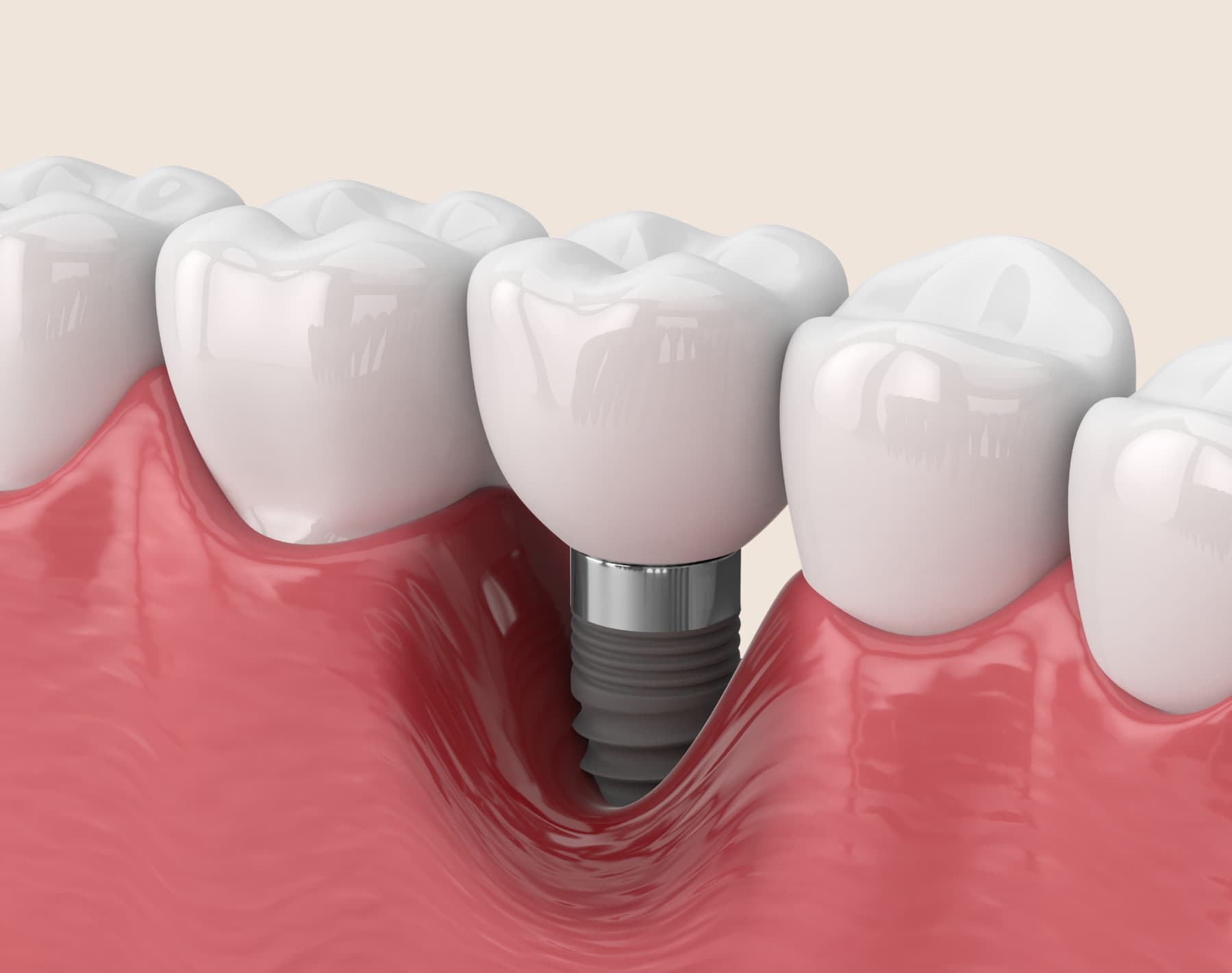
3D planned implant placement for safer surgery and faster healing.
Guided implant surgery uses 3D imaging and a custom surgical guide to place your implant in the exact position planned on the computer, before we ever begin. Think of it as GPS for implant placement: the entire surgery is rehearsed digitally, every millimeter decided in advance, and the guide physically ensures the plan is executed precisely. It is the standard of care we apply to every implant at Rancho Bernardo Dental Arts, not an upgrade.
Your CBCT scan maps your bone, nerves, and sinuses in three dimensions, and we merge it with a digital scan of your teeth. On that model we position your future crown first, then plan the implant to support it ideally. A precision guide printed from that plan seats over your teeth during surgery and directs the drill and implant to the exact depth and angle planned, removing guesswork from the procedure entirely.
Guidance means smaller openings, shorter procedures, less swelling, and faster healing, because we work with surgical certainty instead of exploratory caution. It protects the structures that matter, nerves, sinuses, and neighboring roots, and it positions the implant perfectly for the final crown, which is what makes the finished tooth look and function naturally. Precision at placement is what determines how good the result looks ten years later.
Anyone receiving an implant benefits from guided placement, which is why we use it routinely rather than reserving it. It is especially valuable when bone is limited, when the implant sits near the nerve canal in the lower jaw or the sinus in the upper jaw, when multiple implants must align for a bridge or All on X, and for anxious patients who take real comfort in knowing the entire procedure was rehearsed before they sat down.
Most patients say the surgery felt easier than a filling, and the numbers back them up: guided placements are typically faster and gentler than freehand surgery. The planning happens before your visit, so your appointment is calm, efficient, and precise. Many placements finish in under thirty minutes of actual working time. You feel pressure and vibration, never pain, and most people are genuinely surprised when we tell them the implant is already in.
The placement appointment itself usually runs 60 to 90 minutes door to door, with the guided portion often under half an hour. Before that, expect one planning visit for your CBCT scan and digital impressions, then about one to two weeks while your custom guide is fabricated. The healing timeline afterward matches any implant, roughly three to four months of integration, but guided placement often makes the recovery days noticeably easier.
Guided surgery reduces risk; it does not eliminate biology. The implant still needs healthy bone and clean healing to integrate, so smoking cessation and controlled blood sugar remain important. The guide requires accurate records, which is why we take the scan and impressions carefully and why last minute changes to the plan are rare by design. There is a modest additional lab cost for the guide, and we consider it money spent exactly where it matters most.
Because the openings are smaller and the surgery shorter, recovery from guided placement tends to be gentle: soreness for a day or two, minor swelling, and a quick return to routine, often the very next day. Soft foods for the first several days, no straws for 48 hours, and gentle rinsing as instructed. Many patients report needing nothing beyond ibuprofen. The weeks that follow are quiet while integration proceeds beneath the surface.
Get Started
Professional affiliations