
Insurance
Wondering if your insurance covers your dental exam and cleaning? We’ll let you know in seconds.
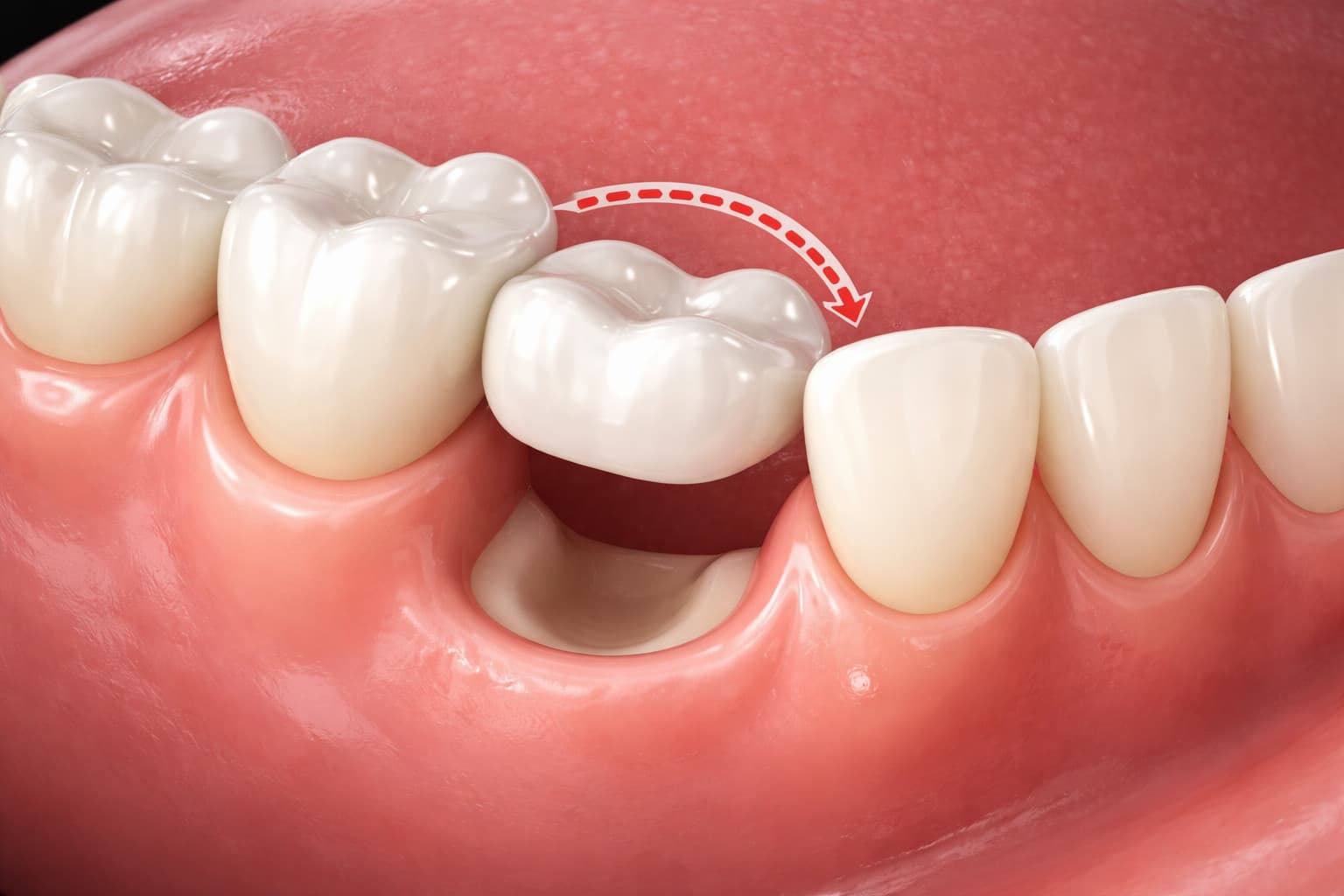
A fixed tooth replacement supported from just one side.
A cantilever bridge replaces a missing tooth using support from a single neighboring tooth rather than two, a conservative choice when only one side of the gap offers a strong anchor. The replacement tooth extends from a crown on that anchor like a small balcony, fixed permanently in place. In the right location, with the right anchor and a carefully managed bite, it is an elegant way to spare an untouched tooth on the other side.
The anchor tooth is shaped and fitted with a crown, and the replacement tooth extends from it as one bonded unit, cemented permanently with careful attention to bite forces. Case selection is the engineering: cantilevers work best replacing smaller teeth in lower stress zones, where leverage on the anchor stays modest. We design the bite so the extended tooth carries gentle contact, protecting the anchor from overload for the long haul.
This design preserves the untouched tooth on the other side of the gap while still delivering a fixed, natural looking result you never remove. Compared with a traditional bridge, it means half the tooth preparation; compared with a removable partial, it means no clasps and no nightly routine. When an implant is not possible or not desired at a site, a well planned cantilever fills the gap conservatively and convincingly.
If you are missing a tooth next to a strong, healthy natural tooth, especially toward the front of your smile or replacing a smaller tooth, a cantilever design may fit your situation well. It is often the answer when the tooth on the far side of the gap is pristine and should stay untouched, or when anatomy rules out an implant. Heavy grinders and large molar gaps usually need a different solution, and we will say so plainly if that is you.
Treatment at our Rancho Bernardo office feels like a standard crown visit: numbing, shaping the anchor, digital impressions, and a precisely fitted final bridge. We evaluate your bite carefully first, that analysis is what makes cantilevers succeed, so the finished bridge performs beautifully for years. Most patients find the process quicker and simpler than they expected, and the result is a fixed tooth that looks like it grew there, with the neighbor across the gap never touched.
Two visits, typically two to three weeks apart: about 90 minutes to prepare the anchor and capture impressions, with a temporary placed, then about 45 minutes to fit and cement the final bridge. In suitable cases our in office milling compresses this further. A well designed cantilever serves for ten years or more; its lifespan tracks directly with bite management and the health of its single anchor, which regular checkups monitor.
Everything rides on one anchor, so its health is non negotiable: meticulous cleaning where the extended tooth meets the gum, floss threaders or a water flosser daily, and prompt attention to any looseness or new sensitivity in the anchor. Avoid habitual hard biting on the extended tooth, no ice, no pen caps. If you grind at night, a guard is mandatory, not optional. We monitor the anchor at every checkup, and insurance treats cantilevers like standard bridges.
There is no surgical recovery, just a few days of mild gum tenderness and passing temperature sensitivity around the prepared anchor. With the temporary, chew gently and skip sticky foods; after final cementation, normal eating resumes the same day, with common sense about the extended tooth. Speech adjusts within a day or two. After a week, the bridge simply feels like part of you, and checkups quietly confirm the anchor stays strong.
Get Started
Professional affiliations