
Insurance
Wondering if your insurance covers your dental exam and cleaning? We’ll let you know in seconds.
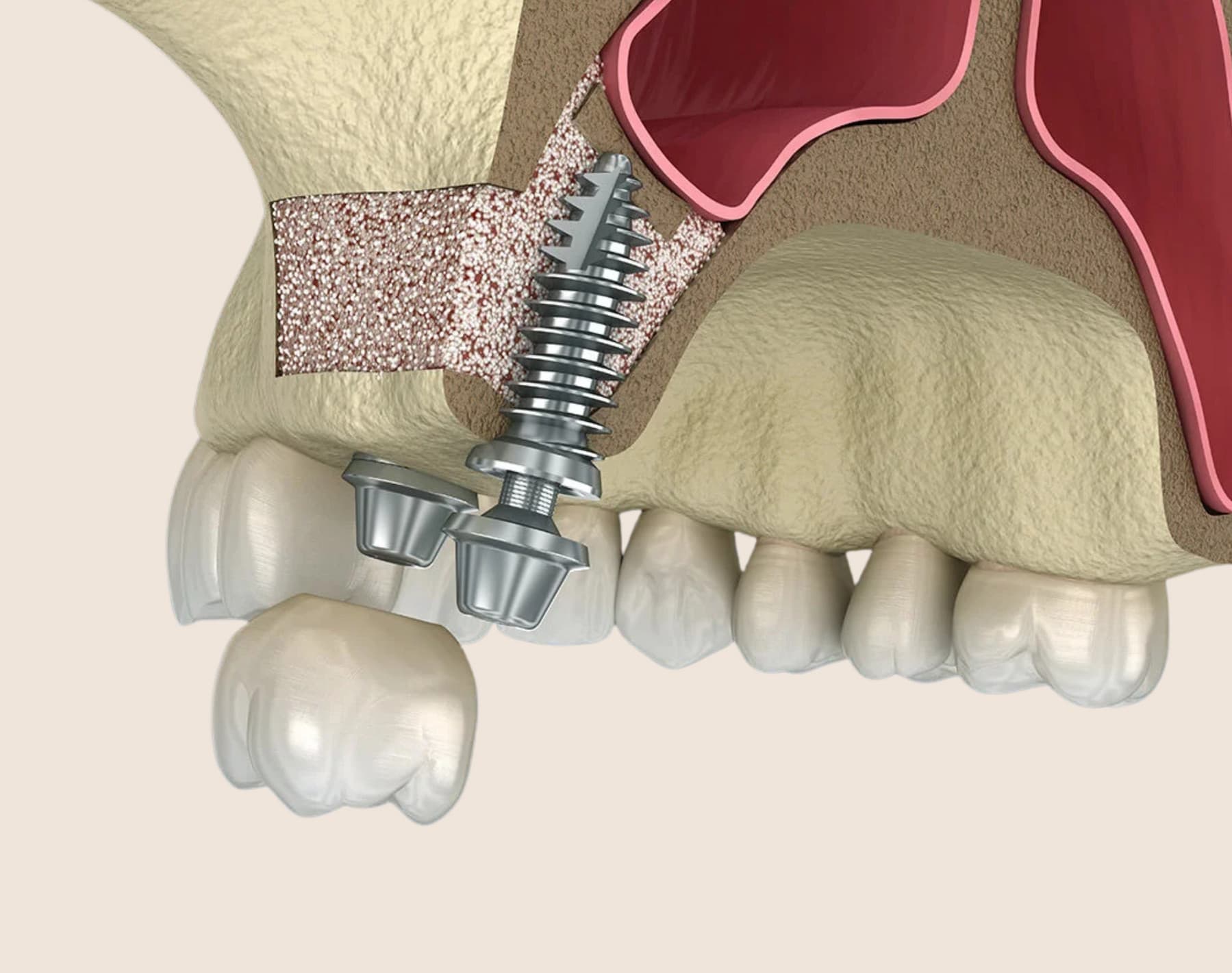
Rebuild lost jawbone and create a strong foundation for dental implants.
Bone grafting rebuilds areas of your jaw where bone has been lost to missing teeth, gum disease, extraction, or injury. It creates the solid foundation a future dental implant needs to succeed, and in some cases it preserves the natural contour of your smile after a tooth is removed. Jawbone shrinks quickly once a tooth is gone; grafting is how we rebuild what time took or protect what remains.
We place safe, biocompatible grafting material, granules that act as a scaffold, into the area where bone is thin, often covering it with a protective membrane. Over the following months, your body grows new bone through and around the scaffold, gradually replacing it with strong, living bone of your own. The most common version, a socket graft placed immediately after an extraction, takes only minutes and prevents most of the shrinkage that would otherwise follow.
Grafting preserves your facial structure, protects neighboring teeth, and opens the door to implants even if you were once told you did not have enough bone. It turns a no into a yes for implant treatment, keeps extraction sites from collapsing into sunken contours, and gives restorations natural, healthy proportions. For denture wearers, rebuilt ridges mean dramatically better fit and comfort.
If you have been missing a tooth for a while, wear dentures, or were told your jawbone is too thin for implants, grafting may make implant treatment possible for you. It is also standard practice at the time of extraction when an implant is planned, preserving the socket is far easier than rebuilding it later. Your CBCT scan shows us precisely where bone is sufficient and where it is not, so the recommendation is measured, not guessed.
At our Rancho Bernardo office, the procedure is shorter and gentler than most patients expect, and socket grafts add just minutes to an extraction visit. With local anesthesia and careful technique, most people describe pressure rather than pain and return to their normal routine within a day or two. The months afterward are quiet; the graft matures invisibly while life goes on, and imaging confirms when the site is ready for the implant.
The grafting procedure itself typically takes 30 to 60 minutes, often combined with an extraction in the same visit. Maturation is where the calendar stretches: three to six months for most grafts to become solid enough to receive an implant, occasionally longer for larger rebuilds. We confirm readiness with imaging rather than guesswork, so your implant is placed into proven bone, not hopeful bone.
Grafting success depends on undisturbed healing: no smoking, which chokes off the blood supply new bone requires, and no poking at the site. Minor graft granules occasionally surface in the first days; that is normal and expected. Conditions like uncontrolled diabetes slow bone growth and need managing first. Most plans and insurance treat grafting as part of implant preparation, and we provide the full cost picture up front, never mid treatment.
Expect mild swelling and tenderness for two to four days, managed with ice and over the counter relief. Eat soft foods for the first week and chew away from the site. Avoid straws, spitting, and vigorous rinsing for 48 hours to protect the graft, then begin gentle salt water rinses. Stitches dissolve or are removed within two weeks. After the first week, the site rarely crosses your mind while the new bone quietly matures.
Get Started
Professional affiliations